
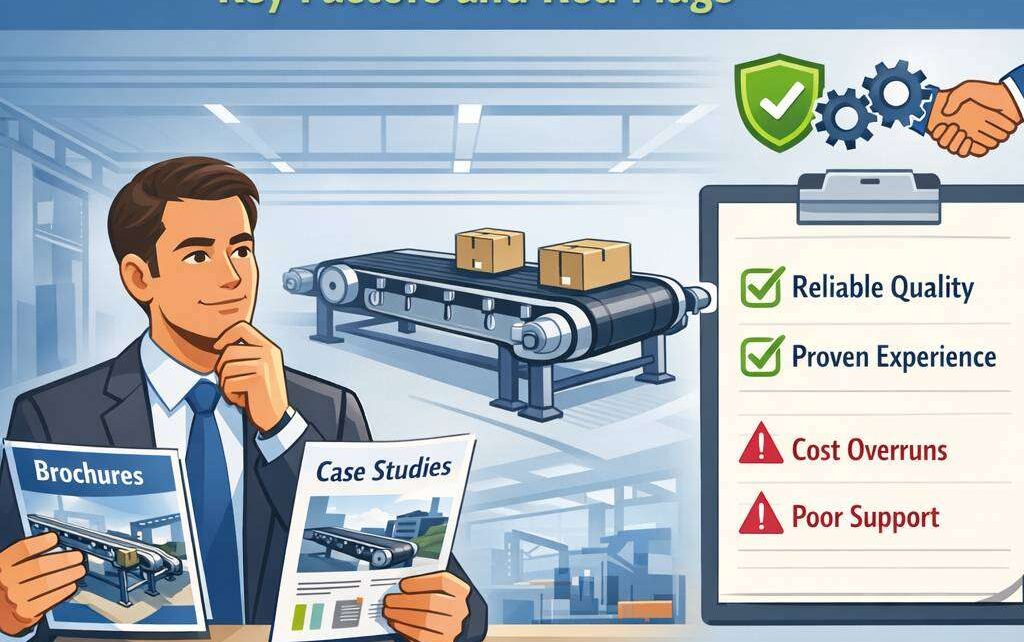
IntroductionChoosing the right belt conveyor company is essential to ensure your material handling solution is reliable, efficient, and compliant with industry standards. Whether you require a modular belt conveyor for complex routing, a horizontal belt conveyor for space-saving layouts, or a robust industrial belt conveyor for heavy-duty applications, the right partner will deliver design excellence, quality manufacture, and timely support. This guide outlines the key factors to consider and common red flags to watch for, helping you make an informed decision that stands the test of time.
What to look for in a belt conveyor company
Experience and track record
- Look for a company with a proven history in delivering belt conveyor systems across multiple sectors, such as food and beverage, packaging, logistics, and manufacturing.
- Examine case studies, client references, and the types of projects completed (modular belt conveyors, roller belt conveyors, powered belt conveyors, and complex belt conveyor systems for sale).
- Consider the breadth of services offered, from initial design and engineering through installation, commissioning, and after-sales support.
Engineering capability and design approach
- A reliable supplier should provide comprehensive design capabilities, including 3D modelling, finite element analysis where required, and risk assessments aligned with CE and other relevant standards.
- They should work with you to optimise the system for your specific application, including belt type (modular vs. solid or roller), belt width, speed, tensioning, and drive arrangement.
- Check whether they offer standard modular components and bespoke configurations, enabling flexibility while maintaining reliability.
Product quality and standards
- Ensure the company sources reputable components and uses quality motors, gearboxes, bearings, and frame materials suitable for your environment (e.g., washdown-rated finishes for hygienic settings or corrosion-resistant materials for harsh environments).
- Verify compliance with applicable standards (UK/EU standards, health and safety regulations, and any sector-specific requirements such as food safety or pharmaceutical cleanliness).
- Ask about life-cycle considerations: energy efficiency options, wear parts availability, and recommended maintenance intervals.
Range of products and solutions
- A strong belt conveyor company should offer a broad spectrum of products, including modular belt conveyors, straight and curved configurations, horizontal belt conveyors, and customised belt conveyor systems for sale.
- Availability of different drive systems (end drive, central drive, multi-drive) and belt types (polyurethane, PVC, natural rubber) can significantly impact performance and maintenance.
- The ability to integrate ancillary equipment like feeders, diverting stations, transfer houses, and sensors for automation is a plus.
Project management and delivery
Timeline and planning
- Reputable firms provide transparent project timelines, milestones, and dependency mapping. They should be able to outline lead times for customised components and availability for installation windows.
- Assess their risk management approach, including site surveys, FATs (factory acceptance tests), and SATs (site acceptance tests) to minimise field issues.
Installation and commissioning support
- Confirm the level of on-site support offered, including installation supervision, commissioning, operator training, and documentation such as operation and maintenance manuals.
- Assess whether the company provides commissioning trials to validate performance under actual operating conditions.
After-sales service and spare parts
- A reliable belt conveyor company should offer ongoing maintenance contracts, rapid access to spare parts, and remote diagnostics where appropriate.
- Inquire about preventative maintenance plans, recommended spare part inventories, and the availability of wear parts for common components like rollers, belts, and bearings.
- Check response times for service calls and the availability of emergency support.
Sustainability and total cost of ownership
Energy efficiency
- Modern belt conveyor systems can be engineered for reduced energy consumption through high-efficiency motors, variable speed drives, and optimised belt tensioning.
- Ask about energy recovery options or drive configurations that minimise peak electrical demand.
Lifecycle cost
- While initial price is important, consider total cost of ownership: maintenance frequency, spare parts costs, downtime impact, and potential for future expansion.
- A good partner will propose scalable solutions that can be upgraded or reconfigured as your needs evolve, protecting your investment.
Support for existing systems and upgrades
- If you already operate belt conveyor systems, assess the company’s capability to retrofit or expand your current setup. The ability to integrate modular belt conveyors or powered belt conveyor sections into an existing layout is valuable.
- For those with legacy systems, confirm compatibility with common control protocols and ease of integration with modern sensors and automation systems.
Red flags to watch for
Inadequate licensing or certifications
- Be wary of suppliers lacking essential licences, insurance, or certifications (for example, CE marking, machinery directives compliance, and safety standards). These have direct implications for duty of care and project liability.
Limited or vague documentation
- A lack of detailed drawings, bill of materials, maintenance instructions, or commissioning plans is a warning sign. Reliable companies provide comprehensive documentation and clear warranty terms.
Poor references or opaque pricing
- Reluctance to share client references or overly aggressive pricing with hidden costs can indicate risk. Request detailed quotations that break down parts, labour, project management, and after-sales support.
Delivery delays and poor project governance
- Recurrent delivery delays, scope creep, or a lack of a clear project plan suggest weak project governance. Ask for a dedicated project manager and a staged delivery timetable.
Quality concerns in components
- Substandard components, inconsistent belt materials, or makeshift assemblies are red flags. Request certifications for key components and insist on traceability.
Conclusion-free noteThis guide provides a framework to assess potential belt conveyor partners against essential criteria and signs of weakness. By focusing on experience, engineering capability, product quality, project management, and after-sales support, you can select a belt conveyor company that delivers reliable belt conveyor systems for sale, including modular belt conveyors, roller belt conveyors, and other configurations suited to your operational needs.
FAQ: Belt Conveyor Company
What does a belt conveyor company do?
A belt conveyor company designs, manufactures, installs, and maintains belt conveyors for various industries, helping clients move goods efficiently, safely, and cost-effectively.
How do I choose the right belt conveyor company?
Consider these factors:
- Industry experience and track record
- Range of products (belt types, accessories, safety features)
- Customization capabilities and engineering support
- Project management, installation, and commissioning services
- After-sales service, maintenance plans, and spare parts availability
- Certifications and compliance with safety and industry standards
What types of belt conveyors can a company provide?
Common types include:
- Troughed belt conveyors
- Flat and rubber belt conveyors
- Troughed and modular belt conveyors-Incline/decline conveyors
- Cleated belt conveyors
- Food-grade and hygienic conveyors
- Heavy-duty and mineral processing conveyors
- Closed belt or pipe conveyors
Do belt conveyor companies offer customization?
Yes. Reputable companies tailor conveyors to your space, throughput, product characteristics, and environment. They’ll assess factors like belt width, speed, load, tension, transfer points, and integration with existing systems.
What industries do belt conveyor companies serve?
Industries commonly served include:
- Manufacturing and assembly
- Mining and minerals
- Food and beverage
- Agriculture and grain handling
- Pharmaceuticals and chemicals
- Logistics and material handling
- Plastics and rubber
- Waste and recycling
What should I expect during a typical project timeline?
A standard project timeline often includes:
- Requirements gathering and feasibility study
- Conceptual design and simulations
- Detailed engineering and CAD drawings
- Fabrication and procurement
- Installation and commissioning
- Operator training and handover
- Maintenance planning and support
Do belt conveyor companies provide maintenance and service?
Yes. They typically offer preventive maintenance programs, spare parts stocking, on-site servicing, remote monitoring, and diagnostic support to minimise downtime.
How do I assess return on investment (ROI) with a belt conveyor system?
Evaluate:
- Capital expenditure vs. throughput gains
- Labor savings and reduced handling
- Energy efficiency and belt life
- Downtime reduction and maintenance costs
- Total cost of ownership over the system life
What safety standards should I look for in a belt conveyor system?
Ask about compliance with:
- OSHA or local safety regulations
- CE marking (if in the EU) and other regional certifications
- Guarding, emergency stops, tension monitoring, and lockout/tagout provisions
- Infeed/outfeed safety, pinch points, and safe maintenance access
How can I compare quotes from different belt conveyor companies?
Request:
- Full scope of work and included components
- Detailed bill of materials and labor
- Delivery schedule and installation plan
- Warranty terms and service levels
- Training, documentation, and commissioning support
- After-sales support and spare parts availability
What is the typical warranty for belt conveyors?
Warranties vary, but often range from 1 to 5 years for major components (belts, pulleys, idlers) with longer-term service agreements available for ongoing maintenance.
Can a belt conveyor company help with upgrades to existing systems?
Yes. They can evaluate current equipment, recommend upgrades (belt technology, drive systems, controls, safety features), and implement retrofits with minimal disruption.
Do they provide digital solutions and automation?
Many belt conveyor companies offer automation options such as:
- PLC and HMI integration
- Variable frequency drives (VFDs) and motor control
- Remote monitoring and diagnostics
- Data analytics for throughput optimization
- Connectivity with ERP/WMS systems
How long does installation usually take?
Timeline depends on project scope. Simple installations may be a few days; complex systems with integration and commissioning can take weeks to months. A reputable company will provide a detailed project plan.
What should I prepare before contacting a belt conveyor company?
- Clear product characteristics (size, weight, humidity, abrasiveness)
- Throughput targets and desired belt speed
- Space constraints and layout sketches
- Environmental conditions (temperature, dust, explosion risk)
- Current system details and pain points
- Budget range and timeline
How can I find a reliable belt conveyor company?
- Check references and case studies in your industry
- Review certifications and safety records
- Ask for design reviews, 3D models, and simulations
- Request a no-obligation feasibility assessment or site survey
- Compare multiple proposals and warranties
A leading belt conveyor company delivers reliable material handling solutions for diverse industries, ensuring efficient throughput and minimal downtime. Our expert team designs, installs, and maintains belt systems tailored to your operation. Learn more about innovative capabilities and trusted service at https://conveyorrollers.co.uk, and discover how we can optimize your conveying workflow today.