

In the fast-paced world of manufacturing, efficiency is key to staying competitive and meeting customer demands. One of the most effective ways to increase operational efficiency is through the implementation of conveyor systems. These ingenious machines have transformed the landscape of manufacturing processes, allowing for the seamless movement of products and materials. In this article, we’ll explore how conveyors improve efficiency in manufacturing and delve into the various types of conveyor systems that are making waves in the industry.
The Role of Conveyors in Manufacturing
At the core of many manufacturing operations lies the conveyor. Essentially, a conveyor is a mechanical apparatus designed to transport materials and products from one location to another. With the advent of modern technology, conveyors have evolved significantly, making them more versatile and efficient than ever before.
In a manufacturing setting, conveyors help streamline operations by reducing manual handling and minimising downtime. When products can move swiftly and smoothly from one workstation to the next, workers are able to focus on their primary tasks, ultimately boosting productivity. Whether it’s directing raw materials to the assembly line or transporting finished goods to a storage area, conveyors play a crucial role in the flow of operations.
Types of Conveyor Systems
The choice of conveyor system can profoundly influence the efficiency of a manufacturing process. Below are some common types of conveyor systems you might encounter:
Belt Conveyors
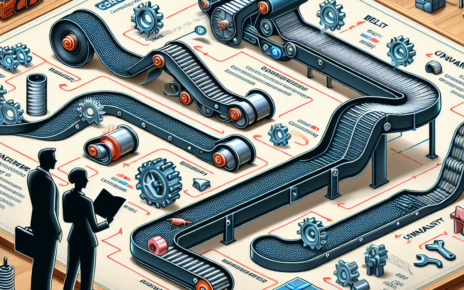
Belt conveyors are among the most widely used types in modern manufacturing. They consist of a continuous loop of material – typically rubber or plastic – that transports goods along various lengths. The simplicity of their design allows for easy integration into existing production lines, making them an excellent choice for efficiently moving bulk products or packages.
The versatility of belt conveyors is another advantage; they can be configured for horizontal, inclined, or declined transport, ensuring that materials travel smoothly across different elevations. This adaptability can significantly reduce the amount of time workers spend moving items manually.
Roller Conveyors
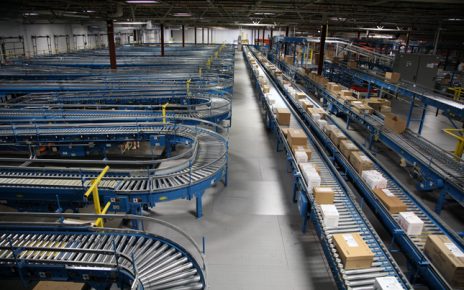
Another popular option is the roller conveyor. This system employs a series of rollers, allowing for easy movement of transported items with minimal effort. These are typically gravity-driven, meaning that items can simply roll along the surface of the rollers.
Roller conveyors are particularly effective in sorting and distributing products across assembly lines because they allow for quick access to various parts of the manufacturing process. They can be easily customised to fit the specific needs of a facility, making them a flexible solution for manufacturers of all shapes and sizes.
Conveyors play a crucial role in modern logistics and manufacturing, streamlining processes and enhancing efficiency. From transporting materials to facilitating assembly lines, these systems offer reliability and speed. For high-quality solutions tailored to your needs, explore a variety of options at conveyor systems available today.
Chain Conveyors
For heavy or bulky items, chain conveyors are often the go-to choice. This system utilises a series of interconnected chains that carry products through the manufacturing process. Chain conveyors are particularly useful in environments where heavy loads need to be transported, as they can withstand significant weight without compromising performance.
By implementing chain conveyors, manufacturers can reduce the risk of product damage while also ensuring smooth and consistent movement through various stages of production. This efficiency not only speeds up the manufacturing process but can also result in cost savings by lowering the likelihood of product loss or damage.
Enhancing Safety with Conveyor Systems
In addition to boosting efficiency, conveyor systems contribute to a safer working environment. They’re designed to reduce the need for manual lifting and carrying, thereby minimising the risk of workplace injuries related to physical strain. Many modern conveyor systems are equipped with safety features, including emergency shut-off switches and guardrails, to further protect workers.
By automating the transportation of materials and products, manufacturers can ensure that employees are focused on tasks that require their specific expertise rather than engaging in repetitive motion that could lead to fatigue or accidents. This focus on safety enables organisations to foster a more conscientious atmosphere, ultimately leading to a decrease in employee turnover and an increase in overall productivity.
The Impact of Automation on Conveyor Systems
As technology continues to advance, so do conveyor systems. The introduction of automation has revolutionised the way conveyors function within manufacturing processes. Automated conveyor systems can be programmed to run at optimal speeds and handle multiple product types simultaneously.
This capability not only increases throughput but also allows for real-time monitoring and adjustments. Manufacturers can track the performance of conveyor systems through integrated software, enabling them to identify bottlenecks and inefficiencies quickly. By leveraging data insights, organisations can fine-tune their conveyor networks to maximise operational efficiency continually.
The integration of automation isn’t just beneficial for large-scale production; even small and medium-sized manufacturers can reap the rewards. By adopting smart conveyor systems, these businesses can compete more effectively, ensuring they remain agile and responsive to ever-changing market demands.
In summary, conveyors are indispensable tools in modern manufacturing. By facilitating seamless transport, enhancing safety, and embracing automation, conveyor systems significantly improve efficiency across various manufacturing processes. As industries continue to evolve, the role of conveyor systems will remain critical, driving operational success and paving the way for future innovations. Whether you’re looking to optimise an existing manufacturing line or design a new one from scratch, investing in a well-suited conveyor system is a strategic move that can yield impressive results.