

In industries that require efficient material handling, conveyors play a vital role. These systems enhance productivity by automating the transport of goods, reducing manual labor and minimizing errors. Choosing the right type of conveyor can significantly improve workflow and operational efficiency in any facility.
In the fast-evolving landscape of modern manufacturing and distribution, efficiency and speed are paramount. One of the most significant innovations that have transformed these sectors is the conveyor system. Originally designed to move materials from one point to another, conveyor systems have evolved into sophisticated, automated solutions that facilitate complex operations across various industries. This blog post explores how conveyors are revolutionising manufacturing and distribution, highlighting their benefits and the latest advancements in technology.
Understanding Conveyor Systems
Conveyor systems are mechanical devices employed to transport materials, products, or goods from one location to another within a facility. Typically made from a series of rotating belts, rollers, or chains, these systems are an integral component of production lines and logistics centres. Unlike manual handling, which can be labor-intensive and time-consuming, conveyor systems streamlining the movement of items, thereby boosting productivity and reducing errors.
The Role of Conveyors in Manufacturing
In manufacturing, conveyors play a vital role in automating processes and enhancing operational efficiency. By seamlessly integrating conveying mechanisms into production lines, manufacturers can optimise the flow of materials and increase the speed of their operations.
One primary application of conveyor systems in manufacturing is assembling products. Rather than having workers manually pass components from one stage to another, a conveyor belt enables efficient movement, allowing workers to focus on specific tasks without interruption. This not only improves production rates but also minimises the risk of injury associated with heavy lifting.
Moreover, conveyor systems can be designed to be flexible, adapting to various product sizes and shapes. For instance, modular conveyors can be easily reconfigured or expanded as the manufacturing needs change, making them a versatile investment for any production facility.
Enhancing Distribution Efficiency
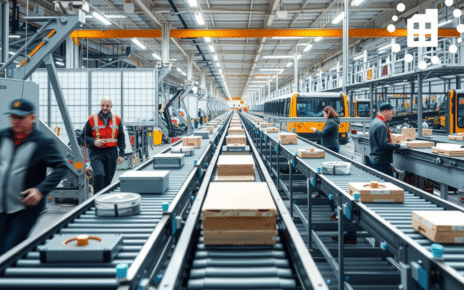
Just as in manufacturing, conveyor systems also play a critical role in distribution processes. In warehouses and distribution centres, conveyor systems streamline the sorting, packing, and dispatching of goods. By automating the movement of products, businesses can significantly reduce the time it takes to fulfil orders.
In a traditional warehouse setup, manual handling often leads to delays and inaccuracies. With conveyor systems, items can be automatically sorted and directed to the appropriate packing stations. This not only expedites the entire process but also enhances accuracy, reducing the chance of shipping errors.
The introduction of technologies such as barcode scanning and RFID systems allows for real-time tracking of inventory on conveyor systems. This capability ensures transparency throughout the supply chain and provides valuable data that can be used for inventory management and forecasting.
Types of Conveyors and Their Applications
There are several types of conveyors, each designed for specific applications within the manufacturing and distribution sectors.
Belt Conveyors: These are the most common type of conveyors, consisting of a continuous loop of material that can transport goods across horizontal or inclined pathways. Belt conveyors are employed in various industries, from food processing to automotive manufacturing.
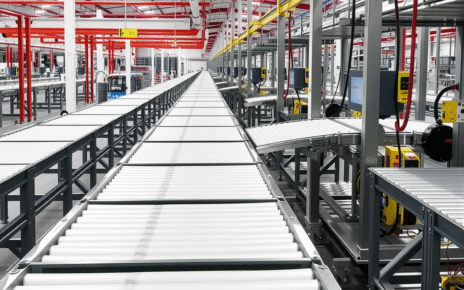
Roller Conveyors: These consist of a series of rollers that transport products by gravity or powered motion. They are often used in distribution centres for the efficient movement of cartons and pallets.
Chain Conveyors: Utilising a series of chains, these conveyors are particularly effective for heavy-duty applications, such as transporting pallets or heavy machinery components.
Screw Conveyors: These are designed to move granular or bulk materials and are often used in agricultural and food production environments.
Magnetic Conveyors: These conveyors utilise magnets to move ferrous materials. They are commonly found in recycling and metal fabrication industries.
The Impact of Automation and Technology
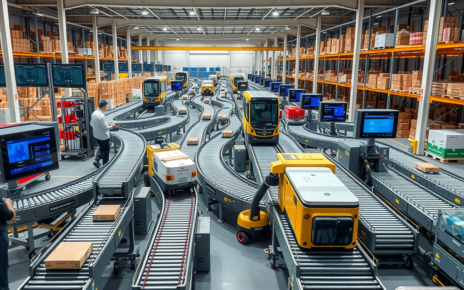
The integration of advanced technologies into conveyor systems has further amplified their effectiveness in manufacturing and distribution. Automation, through the use of artificial intelligence and machine learning, allows conveyor systems to make adaptive decisions based on real-time data. This capability enhances efficiency by optimising routes, adjusting speeds, and predicting maintenance needs, thereby minimising downtime.
Additionally, advancements in materials and design have led to the development of more energy-efficient conveyor systems. For instance, modern conveyors can use electric motors that utilise less energy or be designed to minimise resistance and wear.
These innovations are not just about moving products; they are about creating intelligent systems that optimise the entire supply chain process, ultimately leading to significant cost savings and increased profitability.
Conclusion
As industries continue to seek ways to enhance productivity and efficiency, conveyor systems remain at the forefront of innovation in manufacturing and distribution processes. By automating the movement of materials, reducing manual handling, and integrating smart technologies, conveyors are not only revolutionising how products are made and distributed but also setting the standard for future operational excellence.