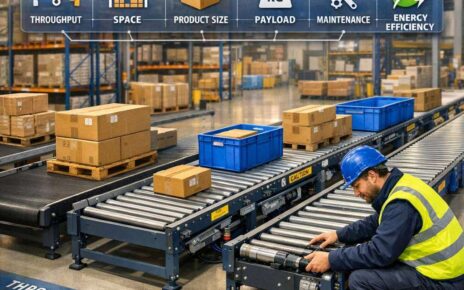


In the realm of modern manufacturing and logistics, the importance of effective material handling cannot be overstated. Conveyor systems play a central role in optimising operational efficiency, reducing labour costs, and enhancing the speed of production. It is crucial for businesses to choose the right conveyor system that aligns with their specific needs while ensuring reliability and durability. This post will delve into ten prominent conveyor systems that have proven their worth in various industries, outlining their unique features and applications without a traditional list format.
Roller Bed Conveyors
Roller bed conveyors are a popular choice in many industrial settings for their versatility and efficiency. These systems utilise a series of rollers mounted on frames, allowing for the smooth movement of products, boxes, and pallets. Ideal for transporting heavy items, roller bed conveyors are often found in warehousing and distribution centres. They can be configured in various layouts to accommodate different facility designs, making them a favourite in material handling solutions.
Belt Conveyors
Belt conveyors are perhaps the most recognised conveyor systems in material handling. Utilising a continuous belt that runs over pulleys, they are ideal for transporting bulk materials as well as packaged goods. Belt conveyors can be tailored for different applications, whether for heavy-duty transport or handling delicate items, thanks to features such as adjustable speeds and inclines. Their simplicity and reliability make them a go-to solution for many industries, from food processing to automotive manufacturing.
Chain Conveyors
Chain conveyors provide an efficient way to handle heavy loads that are often too cumbersome for traditional belt systems. This type of conveyor uses chains to move items along a predetermined path, making them perfect for use in assembly lines and manufacturing processes. Chain conveyors can accommodate items such as pallets, containers, and even large machinery parts. Their robust design ensures longevity and they are particularly useful in environments where durability is paramount.
Modular Conveyors
Modular conveyors offer unparalleled flexibility and customisation, allowing businesses to design a system that perfectly fits their operational requirements. These conveyors can be easily assembled and reconfigured, making them suitable for dynamic environments where production needs change frequently. Modular conveyor systems often feature interchangeable components, allowing for the addition or removal of sections without significant downtime. This adaptability makes them a favourite choice in industries that face fluctuating demands.
Overhead Conveyors
Overhead conveyors are an innovative solution for industries looking to optimise floor space. By suspending the conveyor system from the ceiling, businesses can transport items above workstations without interfering with the operational area below. These systems are particularly advantageous in environments where floor space is limited. They are commonly used in manufacturing, warehousing, and even in retail spaces for hanging garments or other merchandise.
Magnetic Conveyors
Magnetic conveyors utilise magnetic forces to transport ferrous materials along the conveyor path. These systems are particularly effective for handling metal parts, significantly reducing the risk of slippage or misalignment when moving heavy items. Magnetic conveyors are widely used in machine shops and manufacturing facilities that require precise movement of metal components. This technology ensures efficient and reliable transport while minimising manual handling.
Telescopic Conveyors
Telescopic conveyors provide an innovative solution for loading and unloading materials from trucks or containers. Featuring extendable arms that can be extended and retracted as needed, these conveyors facilitate quick and efficient transfers of goods. Their ability to adapt to the height of the vehicle or container allows for seamless movement, thus speeding up the loading and unloading process. This flexibility is especially valuable in logistics and distribution operations.
Screw Conveyors
Screw conveyors, also known as auger conveyors, are primarily designed for transporting bulk materials in a horizontal or vertical direction. They utilise a rotating helical screw blade to move materials along a defined path, making them an excellent choice for transporting powders, grains, or even sludge. Their enclosed design protects the materials from contamination and helps to maintain a clean working environment. Screw conveyors are widely used in agriculture, food processing, and chemical industries.
Pnuematic Conveyors
Pneumatic conveyors employ air pressure to transport materials through a system of tubes. These systems are ideal for moving lightweight materials such as granules, powders, or plastics over long distances. The gentle conveying action of pneumatic systems minimises product damage, making them perfect for sensitive materials. This technology is increasingly popular in food production and pharmaceuticals due to its sanitary handling and efficient transport mechanisms.
Conveyors play a vital role in modern logistics, enhancing efficiency in material handling across various industries. For those seeking reliable conveyor systems and components, https://conveyorrollers.co.uk offers a comprehensive selection. From roller conveyors to custom solutions, their expertise ensures streamlined operations, allowing businesses to optimize workflow and improve productivity while minimizing manual labor. Explore their offerings today!
Automated Conveyor Systems
In today’s fast-paced manufacturing and logistics environments, automated conveyor systems are becoming increasingly prevalent. These conveyor systems integrate advanced technologies such as sensors, robotics, and artificial intelligence to streamline operations. Automated conveyors can adjust their speeds, redirect items, and even sort packages, all without human intervention. This level of automation enhances productivity, reduces the risk of human error, and allows employees to focus on higher-value tasks, thereby transforming traditional material handling processes.
In the competitive market of material handling, selecting the right conveyor system can significantly impact efficiency and cost-effectiveness. The various conveyor technologies available cater to a wide range of operational needs, allowing industries to find the perfect match for their specific requirements. Understanding the capabilities and advantages of each system is essential in making informed decisions that will ultimately lead to improved productivity and operational success.